The Adults Know It’s a Problem. So Why Don’t We Act Like It?

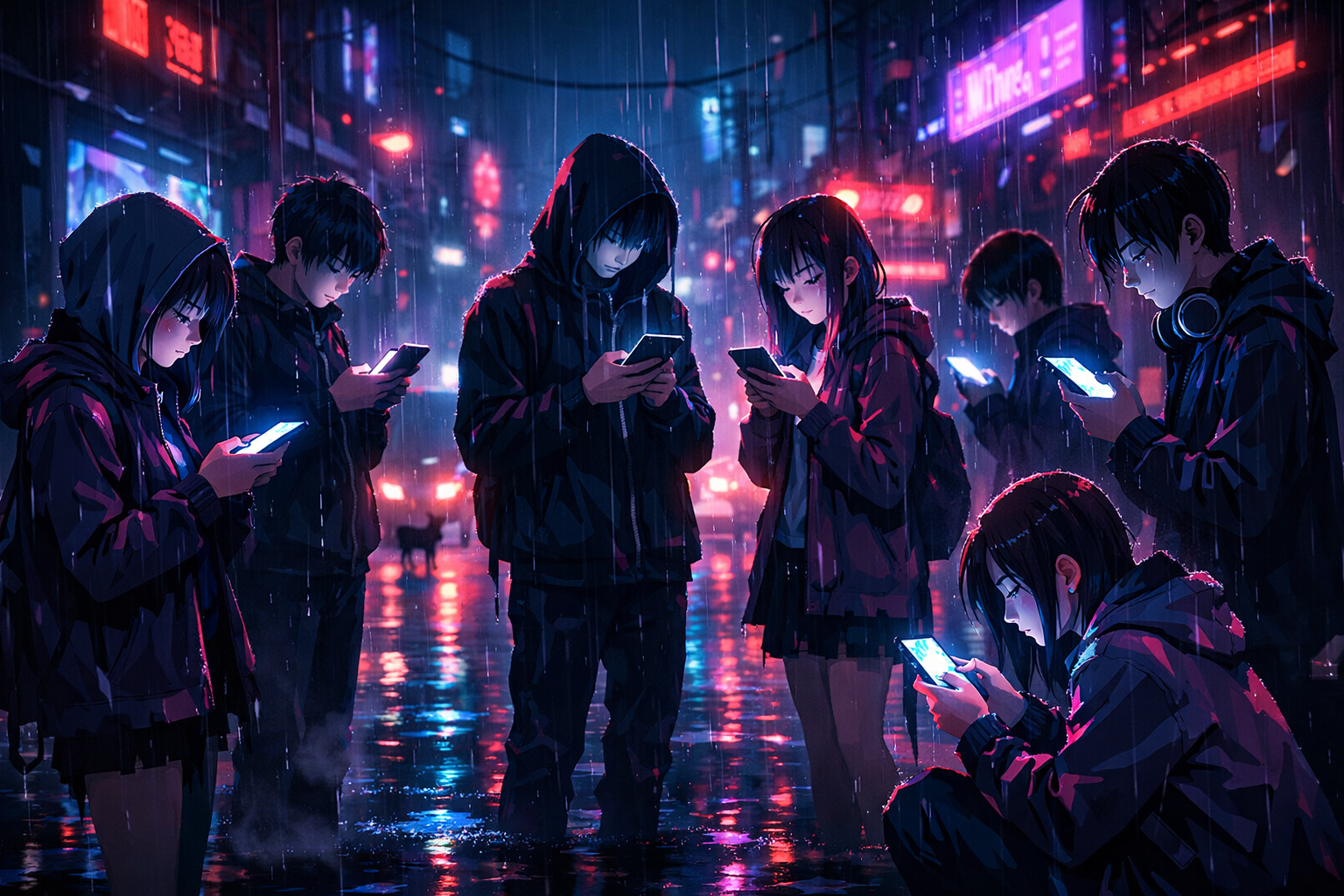
In a recent interview with Dr Rangan Chatterjee, published in The Guardian, the British doctor and podcaster made a statement that felt both obvious and strangely radical.
We should consider banning social media for under-18s.
Not tweaking it.
Not regulating it more tightly.
Not asking platforms to “do better.”
Banning it.
Chatterjee framed the issue in terms of mental health, attention, and what constant digital stimulation is doing to developing brains. He spoke about anxiety, sleep disruption, self-comparison, dopamine loops. None of it was particularly new. Anyone who works with adolescents could have written the script.
And yet, when a mainstream medical voice says it out loud, it lands differently.
It exposes something uncomfortable.
We already know.
We Know It’s Not Neutral
There was a time when social media was framed as neutral infrastructure. A tool. A connector. A platform.
That fiction has collapsed.
The business model is attention extraction. The algorithms are optimised for engagement, not wellbeing. Rage outperforms nuance. Outrage outperforms reflection. Comparison outperforms contentment.
If this were a new chemical introduced into the water supply, we would regulate it instantly.
But because it comes through a screen, because it feels voluntary, because adults are addicted too, we hesitate.
Chatterjee’s point was not technophobic. It was developmental. Teen brains are still wiring. Reward systems are hypersensitive. Social hierarchies matter intensely at that age. The idea that we have inserted a global, algorithmic status machine into that developmental window and shrugged feels astonishing.
Schools Are Pretending It’s Contained
In Queensland, phones are banned during the school day.
Officially.
In practice, students mirror screens, use web versions of platforms, or shift to AI chat apps that bypass the obvious restrictions. The device might be off, but the ecosystem is not.
I see it in subtle ways. Reduced tolerance for boredom. Fragmented attention. A reflex to externalise thinking. A default to “just ask ChatGPT” rather than wrestle with a problem.
The conversation about social media and the conversation about AI are not separate. They are two branches of the same tree. Both reduce friction. Both promise efficiency. Both quietly erode the slow cognitive processes that build depth.
We regulate devices in schools, but we do not regulate the culture that forms around them.
Chatterjee’s call to ban under-18s from social media is, in some ways, less radical than what schools are already attempting during the day. The difference is duration. He is talking about removing the stimulus entirely during formative years, not just from 8:30 to 3:00.
That is the part that makes adults uneasy.
Adults Would Have to Change Too
If you ban social media for under-18s, you implicitly admit something else.
That it is harmful.
And if it is harmful, then why are we modelling its constant use?
Parents scrolling at dinner. Teachers checking notifications between classes. Politicians performing for the algorithm. Journalists writing for outrage cycles.
The under-18 ban forces a moral reckoning. It says this environment is not developmentally safe.
But if it is not safe for them, what exactly is it doing to us?
Chatterjee often speaks about agency. About small daily decisions that compound. About attention as a finite resource. He is not arguing that phones are evil. He is arguing that chronic overexposure to high-stimulation environments rewires behaviour in predictable ways.
We do not let teenagers gamble in casinos. We do not let them drink. We do not let them drive without training.
But we hand them a personalised psychological slot machine at age twelve.
The Counterargument Always Sounds Reasonable
Critics say bans are unrealistic. That teenagers will find workarounds. That social media is how they socialise now. That exclusion could create other harms.
All of that may be true.
But “they will find a workaround” is not an argument against setting boundaries. It is an argument for enforcement being difficult.
We banned smoking in indoor public spaces. People still smoke. We did not abandon the policy because compliance was not perfect.
The deeper resistance is cultural. Social media is embedded in economic systems, politics, advertising, activism, even education. Removing under-18s disrupts that pipeline.
Platforms would lose future consumers. Influencer economies would shift. Metrics would drop.
And we would be forced to confront how much of teenage life we have outsourced to Silicon Valley.
What Happens to Attention When It’s Protected?
This is the part that interests me most.
What if a generation experienced adolescence without algorithmic comparison engines?
What if boredom returned as a normal state rather than an emergency to be medicated by scrolling?
What if social friction was local and embodied rather than global and permanent?
As a teacher, I do not romanticise the past. Teenagers have always struggled. Bullying existed long before Instagram. Anxiety existed long before TikTok.
But scale matters. Permanence matters. Velocity matters.
A cruel comment in a schoolyard used to dissipate. Now it can circulate, screenshot, amplify.
And attention, once fractured repeatedly, is harder to rebuild than we pretend.
This Is Not Just About Teenagers
Chatterjee’s argument exposes something broader. We are living inside systems optimised for engagement, and we are surprised when engagement erodes calm.
The under-18 proposal functions almost like a diagnostic test. If we recoil at the idea, perhaps we are more dependent on the ecosystem than we would like to admit.
The question is not simply whether social media is harmful.
It is whether we are willing to inconvenience ourselves to protect developing minds.
That is a harder conversation.
Because it requires collective restraint in a culture that prizes individual choice.
The Real Radical Idea
The radical idea is not banning social media.
The radical idea is acknowledging that not every technological advance improves human flourishing.
That some tools require age thresholds.
That cognitive development is worth safeguarding even if quarterly earnings suffer.
We regulate chemicals. We regulate pharmaceuticals. We regulate driving ages.
Why is algorithmic psychological engineering exempt?
Chatterjee did not present himself as an extremist. He sounded measured. Calm. Thoughtful.
Which somehow makes the suggestion more destabilising.
When reasonable people start calling for bans, it is usually because the evidence has piled up quietly for years.
And perhaps because, deep down, we already know.